



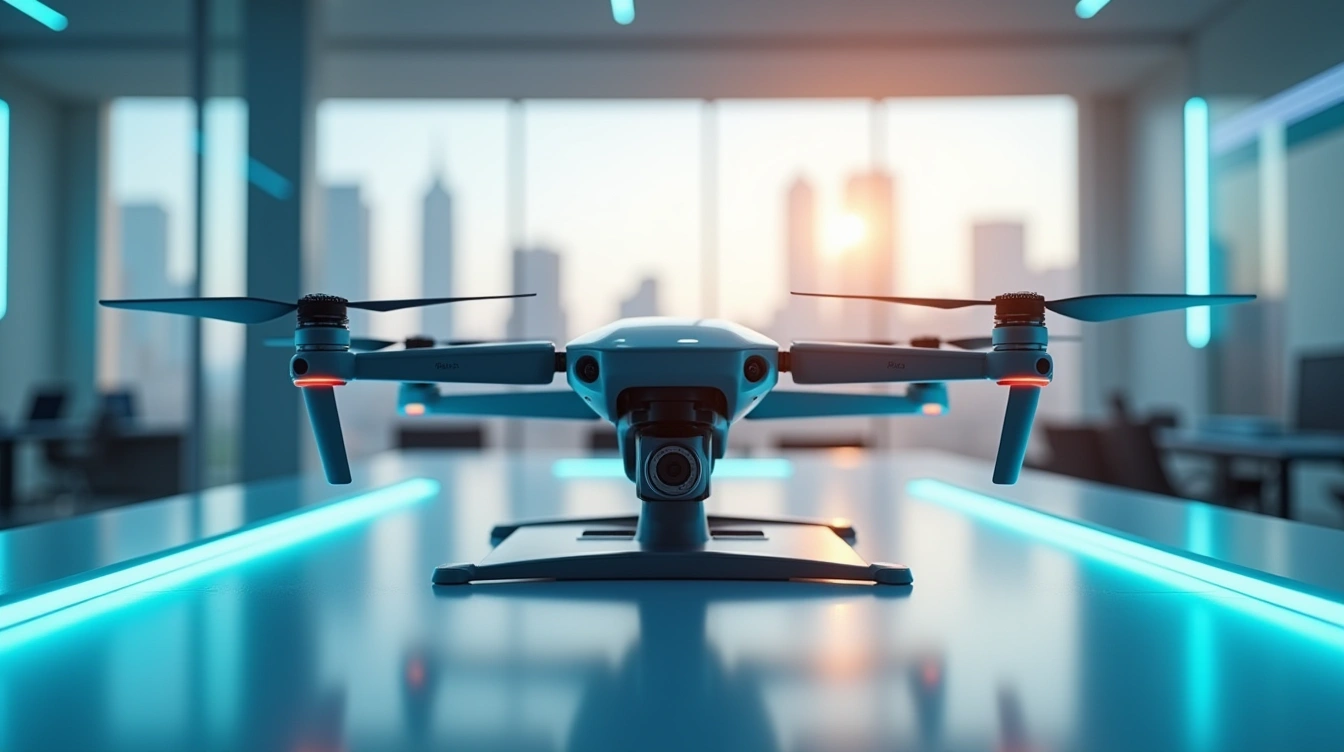
Surveillance is no longer limited to fixed cameras and periodic patrols. A new generation of aerial systems is redefining how security teams maintain constant awareness from above. This shift is transforming not only how threats are detected, but how prevention itself is designed.
The Evolution of Unmanned Aircraft in Modern Surveillance
The surveillance landscape has undergone a dramatic transformation with the emergence of tethered drone technology. According to Grand View Research, the global drone surveillance market reached $4.2 billion in 2024 and is projected to expand at 15.8% annually through 2030. Companies like elistair.com are pioneering continuous aerial monitoring solutions that overcome traditional battery limitations. Will tethered systems redefine how we approach persistent surveillance operations?
This might interest you : Ultimate Guide to Building a High-Performance Video Editing Workstation with AMD Threadripper and DaVinci Resolve
How Tethered Drones Are Transforming Security Operations
The advent of tethered drone technology marks a significant shift in how security operations approach persistent surveillance. Unlike traditional battery-powered drones that require frequent landings and recharging, tethered systems maintain continuous power through a secure ground connection, enabling uninterrupted monitoring for days or even weeks.
This revolutionary approach transforms the fundamental limitations of aerial surveillance. Security teams can now establish a permanent eye in the sky, providing 24/7 coverage without the operational gaps that plague conventional methods. The consistent power supply enables advanced sensor packages, high-definition cameras, and real-time data transmission that would quickly drain standard drone batteries.
Topic to read : Maximize Your Lenovo Yoga C940 for Seamless Content Creation in Adobe Premiere Pro
Integration with existing security infrastructure represents another breakthrough. Tethered drones seamlessly connect to command centers, alarm systems, and monitoring networks, creating a unified security ecosystem. This connectivity allows for automated threat detection, immediate alert distribution, and coordinated response protocols that surpass the capabilities of static cameras or periodic patrol routes.
Compared to traditional security methods like guard towers or roving patrols, tethered drones offer superior flexibility and coverage. They can adjust their position dynamically, follow suspicious activity, and provide multiple viewing angles that fixed installations cannot match.
Technical Specifications and Performance Capabilities
Les spécifications techniques des drones filaires révèlent des performances exceptionnelles qui dépassent largement celles des systèmes traditionnels. Ces plateformes peuvent maintenir une altitude stable jusqu’à 150 mètres avec une portée de transmission vidéo HD atteignant plusieurs kilomètres.
La résistance météorologique constitue l’un de leurs atouts majeurs. Ces systèmes fonctionnent efficacement par vents jusqu’à 60 km/h et résistent aux précipitations grâce à leur certification IP65. Les capteurs haute résolution intégrés offrent une qualité d’image 4K en temps réel.
- Autonomie illimitée grâce à l’alimentation continue par câble
- Transmission vidéo HD sans latence jusqu’à 5 km
- Vision nocturne thermique avec détection jusqu’à 2 km
- Capteurs multiples : optique, infrarouge et détection de mouvement
- Analyse d’images en temps réel avec reconnaissance automatique
Les capacités d’analyse intelligente permettent une détection automatique des intrusions et un suivi d’objets en mouvement. Ces systèmes intègrent des algorithmes d’IA pour l’identification de patterns suspects et la génération d’alertes instantanées.
Critical Deployment Scenarios for Continuous Monitoring
Les infrastructures critiques représentent l’un des domaines d’application les plus stratégiques pour la surveillance par drones filaires. Dans le secteur énergétique, ces systèmes offrent une surveillance 24/7 des centrales électriques, raffineries et installations nucléaires. Contrairement aux patrouilles humaines traditionnelles, la position aérienne permanente permet de détecter immédiatement les intrusions, surveiller les émissions thermiques anormales et maintenir une veille sécuritaire continue sans interruption.
Les événements publics de grande envergure bénéficient également de cette technologie avancée. Les organisateurs peuvent désormais déployer des points d’observation fixes au-dessus des foules, offrant une vision panoramique impossible à obtenir depuis le sol. Cette perspective aérienne constante facilite la gestion des flux de personnes, l’identification rapide des incidents et la coordination efficace des équipes de sécurité, particulièrement lors de manifestations sportives ou culturelles majeures.
Dans les zones industrielles sensibles et les installations frontalières, la capacité de surveillance ininterrompue transforme radicalement l’approche sécuritaire. Ces drones peuvent maintenir une vigilance constante sur de vastes périmètres, intégrant des capteurs thermiques et optiques pour une détection multicouche des menaces potentielles.
Cost-Benefit Analysis and Implementation Strategy
L’évaluation financière des systèmes de drones filaires révèle un retour sur investissement attractif comparé aux solutions de surveillance traditionnelles. L’investissement initial, incluant l’équipement, l’installation et la formation du personnel, se situe généralement entre 50 000 et 150 000 euros selon la complexité du déploiement.
Les économies opérationnelles deviennent rapidement perceptibles. Contrairement aux patrouilles humaines ou aux systèmes de caméras fixes multiples, un drone filaire réduit les coûts de personnel de 60 à 70%. Les frais de maintenance représentent environ 10% de l’investissement initial annuellement, principalement concentrés sur les composants électroniques et les vérifications de sécurité.
L’implémentation stratégique nécessite une approche progressive. La phase pilote permet d’évaluer l’efficacité opérationnelle sur un périmètre restreint avant le déploiement complet. La formation des équipes techniques représente un investissement de 5 000 à 8 000 euros par opérateur, mais cette expertise interne garantit une utilisation optimale du système et réduit la dépendance aux prestataires externes.
Regulatory Framework and Legal Compliance
The commercial deployment of tethered drone systems operates within a complex regulatory landscape that varies significantly across jurisdictions. Most aviation authorities classify these systems differently from traditional UAVs due to their physical connection to ground-based power sources, creating unique certification pathways and operational requirements.
In the United States, the FAA requires specific waivers for prolonged surveillance operations, particularly when tethered systems operate above standard altitude limits. European regulations under EASA framework focus heavily on data protection compliance, mandating strict adherence to GDPR requirements when surveillance footage captures identifiable individuals or private property.
Privacy considerations represent the most challenging aspect of legal compliance. Organizations must implement robust data handling protocols, including automatic anonymization features and restricted access controls. Many jurisdictions require public notification when deploying surveillance systems in populated areas, with some mandating visible signage and opt-out mechanisms for residents.
International operations face additional complexity, as cross-border data transmission must comply with varying national security regulations. Companies expanding globally often establish region-specific data centers to ensure compliance with local sovereignty laws while maintaining operational efficiency across their tethered surveillance networks.
Your Questions About Tethered Surveillance Technology
What are the advantages of tethered drones over traditional surveillance methods?
Tethered drones offer continuous operation without battery limitations, provide elevated vantage points impossible with ground cameras, deliver real-time HD footage, and cost significantly less than helicopter surveillance while maintaining 24/7 operational capability.
How long can a tethered drone stay in the air for surveillance?
Tethered surveillance drones can operate indefinitely as long as ground power is available. Most systems maintain continuous flight for weeks or months, limited only by scheduled maintenance rather than battery capacity constraints.
What is the range and coverage area of tethered drone surveillance systems?
Tether length typically ranges from 100 to 400 meters, providing coverage areas of 2-50 square kilometers depending on altitude. Advanced systems can monitor multiple zones simultaneously with 360-degree camera capabilities and zoom functions.
How much does it cost to implement tethered drone surveillance technology?
Initial investment ranges from $50,000 to $200,000 for complete systems. Operational costs average $2,000-5,000 monthly, making it significantly cheaper than traditional helicopter surveillance which costs $3,000-5,000 per hour of operation.
Are tethered drones legal for commercial surveillance applications?
Yes, tethered drones are legal for commercial surveillance in most jurisdictions. They typically require standard drone operator certification and must comply with local privacy laws and airspace regulations governing surveillance activities.